How SPEED Works

Understanding Speed
This animation illustrates the corrective elastic action of the SPEED Spring Clip. The mutual action of archwire and spring provides precise tooth control.
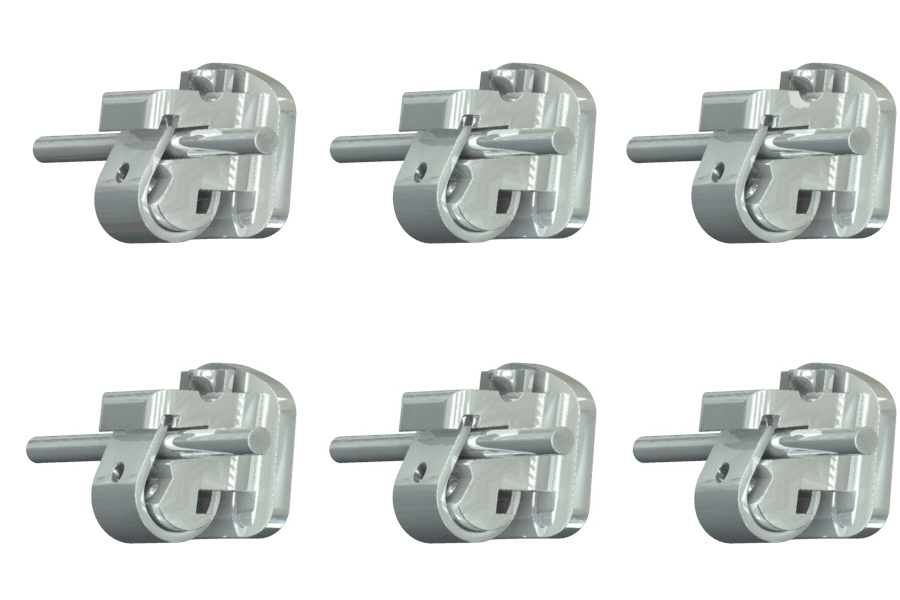
• Resilient Nickel Titanium Spring Clip entraps the wire
• Spring Clip and archwire cooperate
• Mutual action extends appliance activation
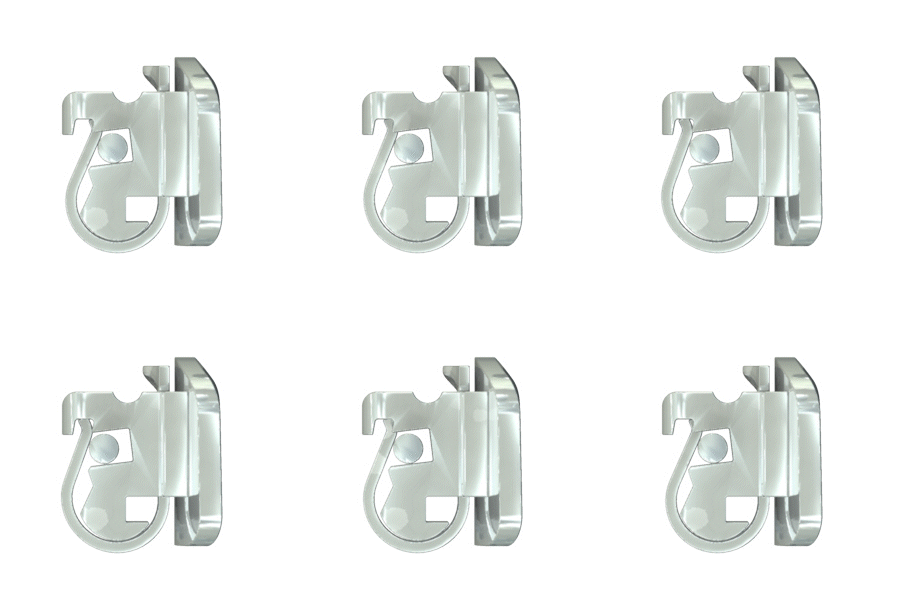
• Extremely light force delivery
• Greater precision in tooth control
• Predictably low friction
How SPEED Stores Energy
Proof of Concept – SPEED Bracket Prototype 1970
This experiment by Dr. Hanson in 1970 revealed that a primitive and largely hand-made SPEED bracket prototype could propel itself through a arc of 30 degrees relative to a rigid wire.
The ability of the appliance to “true itself” to the archwire in all 3 planes of space is at the heart of the SPEED design. It is the foundation upon which the SPEED design, and all other “active” appliances are based
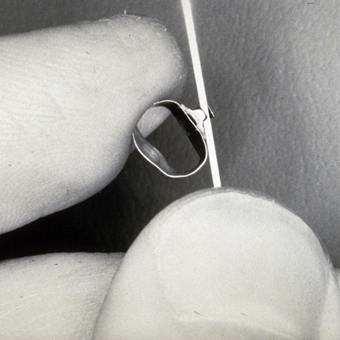
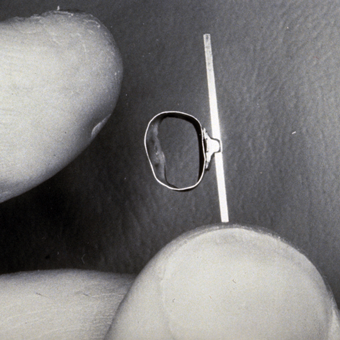
Note:
1. The dent in his left index finger
2. The torsional deflection of the spring
3. The band – archwire alignment after release
4. How far the band has moved away from his thumb
How SPEED Controls Rotations
This isometric view illustrates how SPEED’s Nickel Titanium Spring Clip provides rotational correction. Notice how the Spring Clip maintains constant contact with the arch wire.
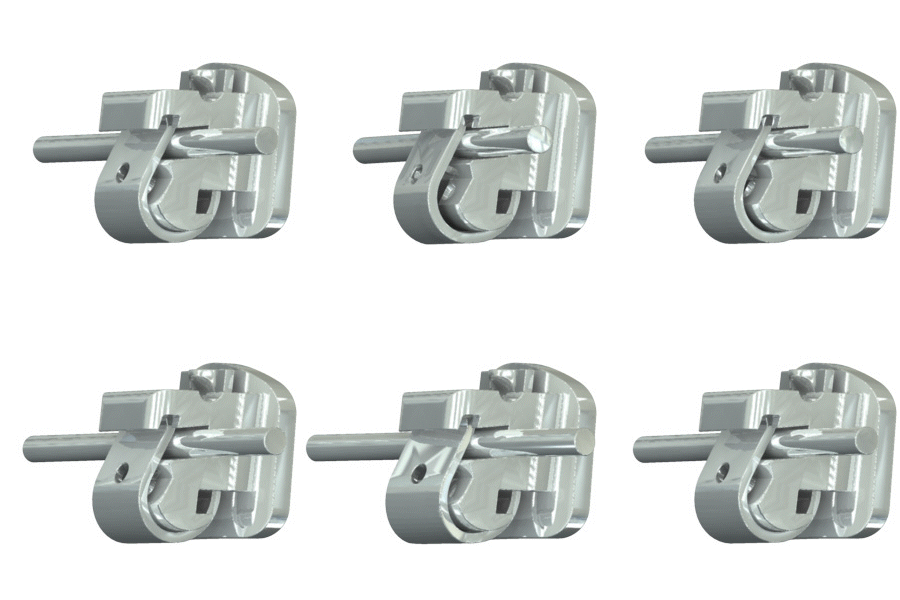
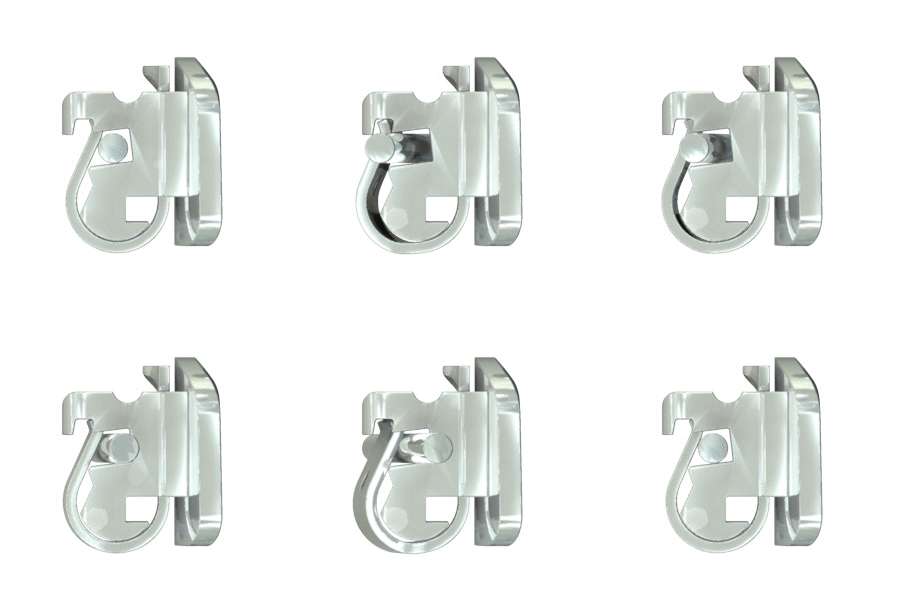
When rotational correction is required, SPEED’s Spring Clip is activated upon arch wire engagement. Once deflected elastically by the arch wire, the SPEED Spring Clip provides corrective forces, which ensure “full” rotational correction. Any subsequent deviation from this ideal is corrected through the reactivation of SPEED’s unique homing action.
Clinical Rotation Examples
In his September, 1980 American Journal of Orthodontics article, SPEED inventor Dr. G. H. Hanson presented this case in which one activation resulted in 29 degrees of premolar rotation, more than half of which was attributable to the action of the SPEED Bracket. Notice that the bicuspid not only rotates but translates.
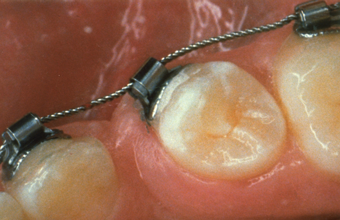
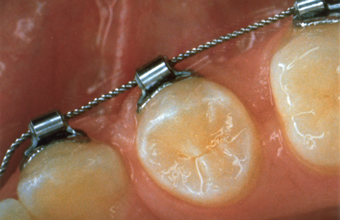
Although these first generation SPEED Brackets did not have the “escape-proof”
feature, they provide dramatic evidence of their ability to rotate teeth.
How SPEED Controls Tip
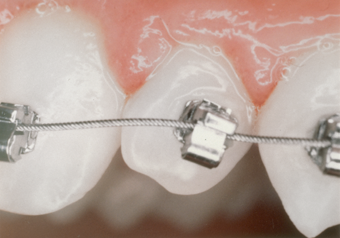
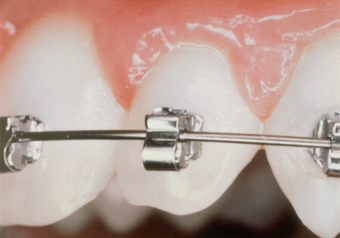
When second order or tip control is required, SPEED’s Spring Clip is activated upon arch wire engagement. The labial deflection of the Spring Clip remains until the bracket and its accompanying tooth are precisely re-oriented relative to the archwire. Any subsequent deviation from this ideal is corrected through the reactivation of SPEED’s unique homing action.
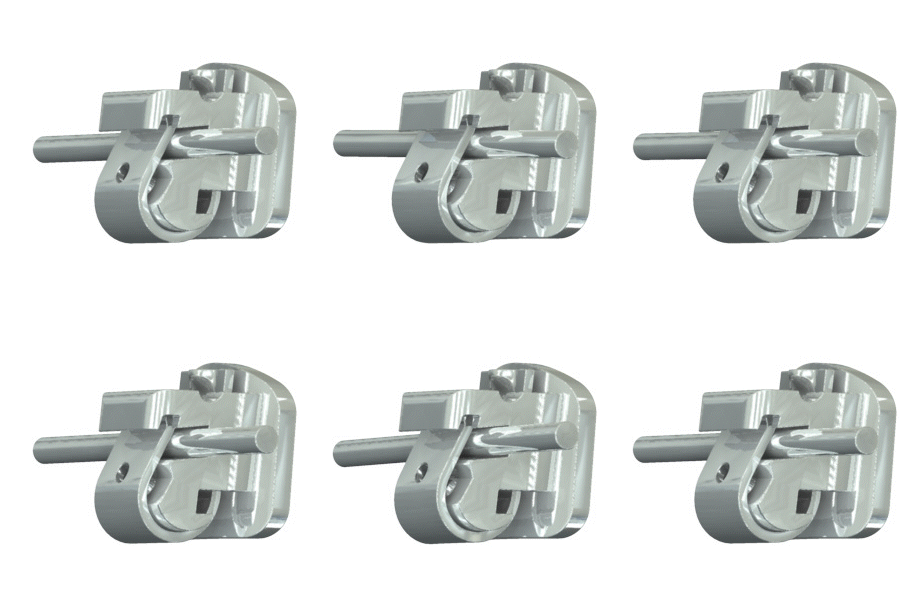
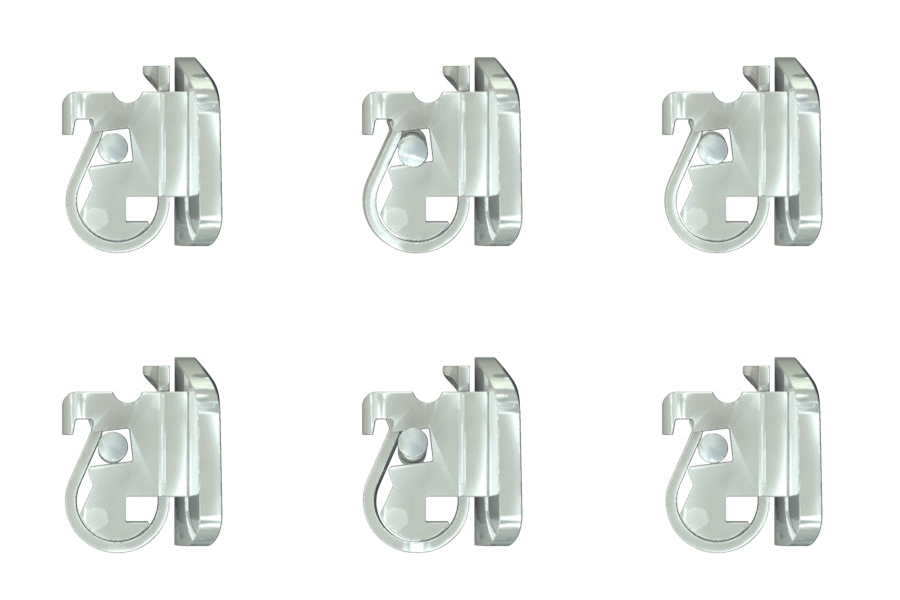
Isometric and side view of tip correction due to deflection of the Spring Clip. This action ensures ideal root parallelism after bodily translation.
Clinical Tip Example
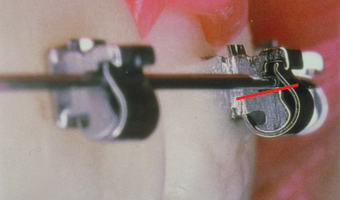
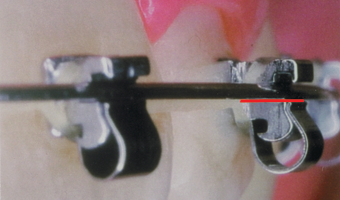
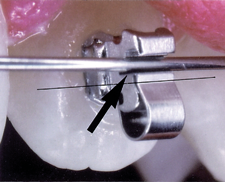
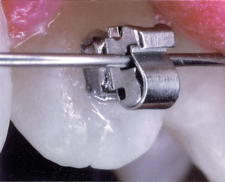
The SPEED Spring Clip, and its accompanying tooth, shown here, have rotated themselves clockwise to eliminate the gap (arrow) between the mesial end of the slot and the wire. The Spring Clip works relentlessly to establish and maintain continuous contact between the entire mesio-distal length of the slot and the wire.
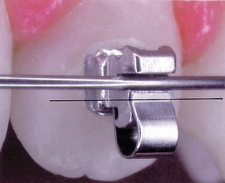
May 1, 1996
June 1, 1996
How SPEED Controls Torque
SPEED’s edgewise slot will accommodate square, rectangular, or SPEED shaped archwires for full torque control. Torque control is achieved in the same manner as with conventional edgewise appliances.
Clinical Torque Example
The photograph, below left, shows the Spring Clip deflected indicating that there is a torque discrepancy between the wire and the bracket. Later, below right, the Spring Clip and bracket have re-oriented the tooth so that the archwire slot is parallel to the occlusal edge of the archwire.